November 24, 2025

Ottawa’s Luxury Real Estate Market doesn’t always make national headlines, but in 2026, maybe it should.
While bigger cities like Toronto and Vancouver are showing signs of softness at the top end, Ottawa’s luxury market is gaining momentum. Sales are climbing, prices are holding steady, and buyer confidence is growing.
What’s fueling this unexpected strength in Ottawa’s luxury real estate market? A mix of smart local demand, intergenerational wealth transfer, and evolving expectations around what luxury living really means today.
Whether you’re selling a luxury property, buying your first high-end home, or simply staying informed, these five key trends reveal exactly where Ottawa’s luxury real estate market is headed — and why now might be the right time to make your move.
As Canada's broader housing market continues to adjust after two years of interest rate hikes, Ottawa's luxury real estate sector has shown remarkable stability and strength, especially compared to larger markets like Vancouver and Toronto.
In 2024, while cities such as Vancouver saw luxury sales plummet by nearly 39% and Toronto recorded a 5% decline, Ottawa defied the trend with a 13% increase in luxury home sales year-over-year. That growth placed Ottawa among the best-performing luxury home markets in the country.
What makes Ottawa’s performance notable is the balance between supply and demand. While other markets hesitated, local buyers remained confident, and well-positioned listings often attracted multiple offers, even in a higher interest rate environment. New luxury builds in Ottawa – often with modern designs and smart features – have added supply and kept upward pressure on prices.
Unlike other segments, luxury real estate doesn’t move in big swings. Wealthier buyers tend to wait for the right property, which helps keep prices steady, even if the number of sales fluctuates.
For both buyers and sellers, this resilience signals that Ottawa’s luxury market is not just surviving national headwinds, it’s quietly gaining ground.

The face of luxury homeownership in Canada is evolving and fast. While Baby Boomers have long been the dominant force in the high-end real estate space, 2025 is seeing a growing presence of affluent Gen-X and Millennial buyers, many of whom are entering the luxury market earlier than previous generations, often with the help of family wealth.
This generational shift is being fueled by one of the largest financial transfers in Canadian history. According to Statistics Canada, roughly one-third of homeowners under age 35 have received direct financial assistance from family to buy their homes. The average gift or inheritance? Approximately $85,000 !
Even more telling, Bank of Canada data shows that the number of first-time homebuyers who had a parent co-sign their mortgage has tripled from just 4% in 2004 to 13% by 2022. And for many of these buyers, this support is crucial: the Bank estimates that nearly 74% of co-signed buyers wouldn’t have qualified for a mortgage on their own under current stress test rules.
Homeownership is now a multigenerational advantage. If your parents own property, you’re not only more likely to buy, but also more likely to buy bigger and earlier.
This “Bank of Mom and Dad” effect is reshaping the luxury market in cities like Ottawa. It’s not just retirees and legacy wealth fueling sales anymore. More buyers in their 30s and 40s—especially in tech, government, and professional sectors—are upgrading to $1M+ and $2M+ homes with the help of early inheritances or co-investments from family. This “looming wave of intergenerational wealth transfer” is already making luxury real estate more accessible to a wider, more diverse buyer base.
Canada’s rapid population growth is reshaping housing demand across the country including in the luxury segment. In 2023, the population surged by 1.27 million people, or +3.2%, marking the fastest growth in over six decades . More than 97% of this increase came from international migration, driven by record numbers of new permanent residents, skilled workers, and international students.
This wave of newcomers has placed upward pressure on housing supply and prices nationwide. While most of the headlines focus on affordability in the general real estate market, luxury housing is also feeling the effects. A growing number of newcomers are arriving with serious financial means—think executives, tech professionals, and international entrepreneurs—and they are actively investing in Canada’s high-end homes, especially in urban centres.

Even in the context of Canada’s foreign buyer ban, which was introduced in 2023 and recently extended through 2027, luxury demand has remained stable. That’s because the ban only applies to non-residents. Many affluent newcomers become permanent residents or citizens before buying, meaning they aren’t impacted by the ban. As Royal LePage President and CEO Phil Soper noted, “the prohibition on foreign buyers has had virtually no impact on housing prices in Canada”. In fact, the absence of non-resident investors hasn’t affected pricing or inventory in any meaningful way.
In Ottawa, this is especially noticeable. The capital continues to attract well-educated, high-income immigrants, including those working in the tech sector, academia, and public service. For many, Ottawa’s blend of prestige, quality of life, and relative affordability (compared to Toronto or Vancouver) makes it a natural choice for a long-term investment in luxury property.
On top of that, internal migration is playing a role too. Canadians from places like Toronto and Vancouver are relocating in search of more space, better quality of life, and relative affordability. While Alberta has seen a lot of this movement, Ottawa is holding its ground as a balanced, attractive alternative. It offers all the urban perks without the price volatility or ultra-competitive bidding wars of larger cities.
As these migration patterns continue to evolve, Ottawa is quietly becoming one of the most desirable places in Canada for luxury home buyers, whether they’re arriving from overseas or just moving across the country.
It’s no surprise that interest rates have a huge influence on Canada’s real estate market—but their effect on the luxury segment has been notably different than on entry-level homes.
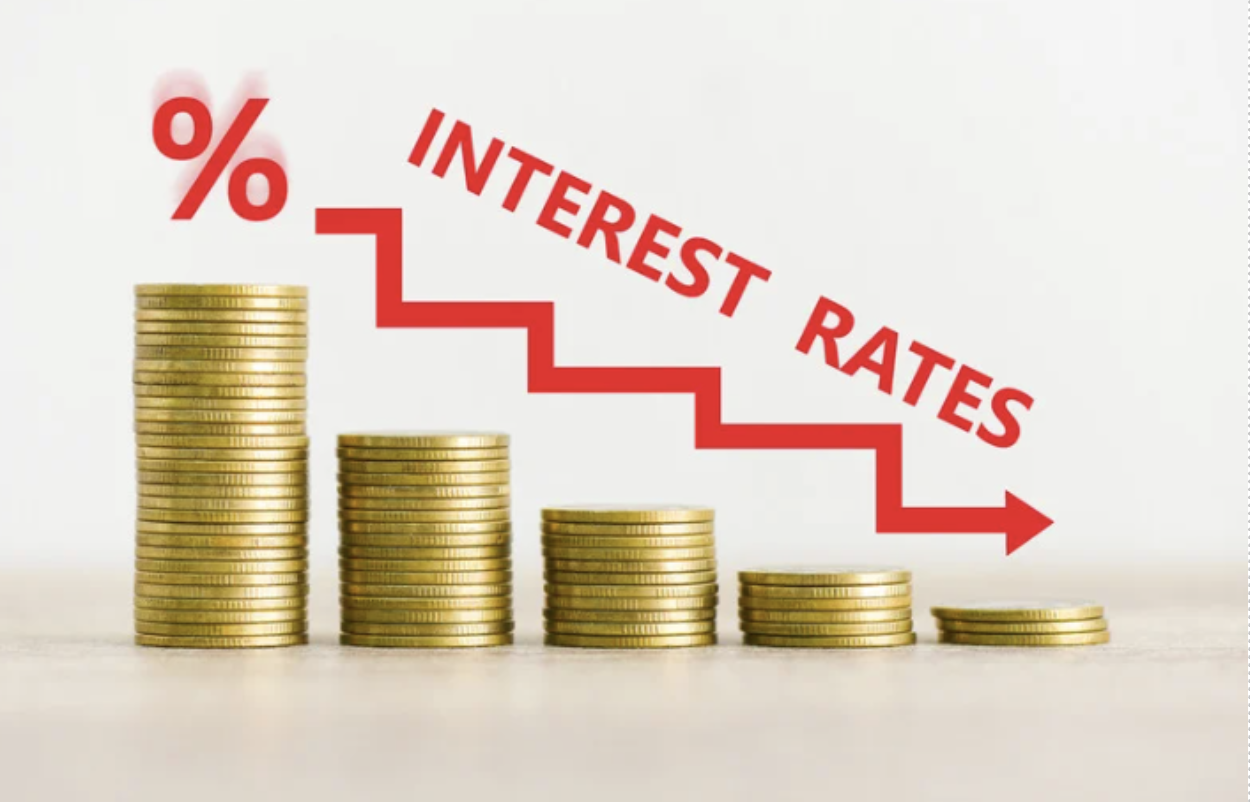
In 2022 and 2023, the Bank of Canada raised its key interest rate to 5%, its highest point in over two decades. That move cooled activity across much of the market, especially for first-time and mid-level buyers. But in the luxury space, the reaction was more of a pause than a pullback.
That’s because many luxury buyers aren’t borrowing heavily. A large portion pay in cash or bring significant equity to the table, which means they’re less affected by mortgage rates. For this group, interest rates tend to act more like a market signal than a financial hurdle. In 2023, while entry-level buyers were locked out by 7%+ mortgage rates, many luxury clients simply sat on the sidelines, watching and waiting for the right moment to re-enter.
That moment came in mid-2024. As inflation cooled, the Bank of Canada began lowering rates for the first time in years, cutting five times in a row and dropping the benchmark rate to 3.25% by December and renewing optimism across the market.
“We saw a sharp uptick in buyer interest after the first rate cut. Buyers realized prices were beginning to rise again and they didn’t want to wait.” — Phil Soper, CEO, Royal LePage
The rate relief not only boosted buyer confidence, it also helped pull forward demand into traditionally slower seasons. In early 2025, agents across major markets—including Ottawa—began reporting faster sales, more multiple-offer scenarios, and a noticeable return of luxury buyers who had been waiting on the sidelines.
Even for buyers who aren’t dependent on financing, lower rates often mean better portfolio performance, improved investment returns, and a general sense of optimism. And for those who are stretching into the luxury tier with financing, rate relief can be the tipping point that turns hesitation into action.
Looking ahead, if the Bank of Canada continues its gradual rate-cutting strategy through the rest of 2025 and 2026—as many experts expect—it could give luxury housing another boost. No major policy changes are on the table for the high-end segment at this point, but we are watching closely.
For now, it’s clear: lower rates are breathing new life into Canada’s luxury market, and Ottawa is feeling that momentum.
Today’s luxury buyers in Ottawa are looking for more than just square footage or postal codes, they’re prioritizing homes that align with their values, routines, and long-term comfort.
That means smart home technology, sustainable building practices, and wellness-focused amenities are no longer just "nice-to-haves", they’re expected. Features like integrated lighting and climate systems, EV charging stations, energy-efficient design, and spa-style bathrooms are becoming standard in new $1M+ listings across the city.
This shift is especially pronounced among younger buyers and professionals relocating from larger cities. These clients want high-end homes that reflect modern living standards, not just traditional luxury.
In neighborhoods like Rockcliffe Park, New Edinburgh, and Westboro, we’re seeing a new wave of contemporary luxury builds, sleek, stylish, and designed with intentionality. The luxury experience today is about convenience, sustainability, and seamless design—and Ottawa is increasingly delivering on all three.
As Royal LePage notes, luxury home buyers today are younger, more diverse, and increasingly values-driven. They care about sustainability. They want intuitive tech. And they’re not just buying for status—they’re buying for lifestyle.
In short, the luxury housing market is no longer an exclusive club for old-money elites. It’s being reshaped—quietly and powerfully—by a generation inheriting not only wealth, but also a vision for how and where they want to live.

From surging local demand to multi-generational buying power, Ottawa’s luxury real estate market is entering a period of sustained momentum. Sales are up, prices remain strong, and buyer preferences are shifting toward smarter, more sustainable, and design-forward homes. At the same time, lower interest rates and growing interprovincial and international migration are pushing more qualified buyers into Ottawa’s top-tier neighborhoods.
For homeowners, this means strong selling conditions and an expanding pool of well-positioned buyers. For those looking to purchase, it’s a moment of opportunity before prices accelerate further or inventory tightens again.
Whether you’re buying, selling, or simply exploring your next step, Sezlik.com is your expert partner in Ottawa’s most exclusive homes.
✅ Looking to list your luxury property? We bring unmatched market insight, refined marketing strategies, and a curated buyer network.
✅ Searching for a luxury home in Ottawa or beyond? We’ll help you find a luxury residence that reflects your lifestyle, values, and investment goals.
Contact us today to speak with a trusted advisor and discover what’s possible in Ottawa’s evolving luxury real estate market.
1. Why is Ottawa’s luxury real estate market growing in 2026?
Ottawa’s luxury market is seeing steady growth due to a combination of stable pricing, strong local demand, rising intergenerational wealth transfers, and increased migration—both international and domestic. These factors are keeping the market competitive while other major cities cool.
2. Who is buying luxury homes in Ottawa today?
More luxury buyers in Ottawa are younger professionals—especially Gen X and Millennials—many entering the market earlier with support from family wealth or co-signed mortgages. Baby Boomers are still active but no longer dominate high-end sales.
3. How are interest rate cuts affecting luxury real estate in Ottawa?
Luxury buyers, many of whom use little or no financing, are less affected by rates—but rate cuts have improved market sentiment and boosted portfolio values. This has brought previously hesitant buyers back into the market, fueling more offers and quicker sales.
4. Has the foreign buyer ban impacted Ottawa’s luxury housing market?
Not significantly. Most luxury buyers in Ottawa are either Canadian residents or soon-to-be permanent residents, which means the ban doesn't apply. According to Royal LePage, the foreign buyer prohibition has had “virtually no impact” on prices or inventory.
5. What are today’s luxury homebuyers in Ottawa looking for?
Buyers are prioritizing smart features, sustainable design, and wellness amenities. Homes with integrated tech, energy efficiency, EV charging, and spa-style bathrooms are in high demand—especially in neighborhoods like Rockcliffe Park and Westboro.
6. Is now a good time to buy or sell a luxury home in Ottawa?
Yes. With growing demand, stable pricing, and more qualified buyers entering the market, 2026 is shaping up as an ideal time for both buyers and sellers to act before inventory tightens further or prices rise.
7. How can Sezlik.com help with buying or selling luxury property in Ottawa?
Sezlik.com specializes in Ottawa’s most prestigious neighborhoods. Whether you’re buying or selling, the team offers expert market insights, tailored strategies, and a network of qualified buyers to help you succeed in Ottawa’s evolving luxury market.
Team Realty, Brokerage
Powered By Repliers Real Estate APIs